



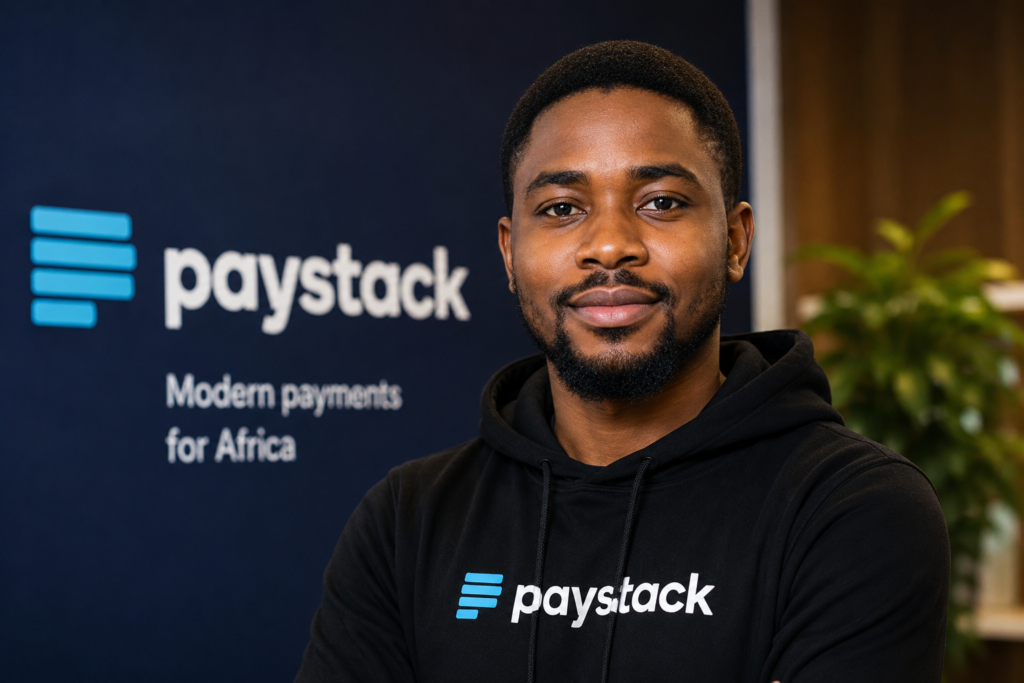
Shola Akinlade: How He Built Paystack Into One of Africa’s Biggest Fintech Stories

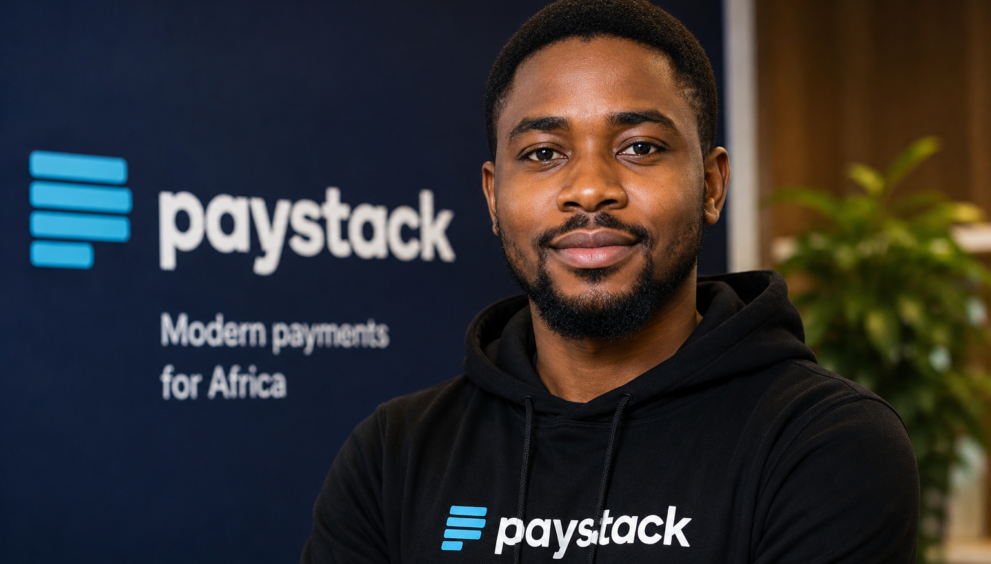
For businesses trying to sell online in Nigeria, accepting payments could be complicated, unreliable and unnecessarily difficult. Customers wanted to pay. Businesses wanted to get paid. But the technology connecting the two was not keeping up with the growth of Africa’s digital economy.
Shola Akinlade saw an opportunity in that gap.
Alongside his longtime friend and co-founder Ezra Olubi, he built Paystack around a simple ambition: make it easier for African businesses to accept payments and participate in the digital economy.
What followed became one of the most important startup stories to emerge from Africa.
Paystack went from a young Nigerian startup to the first Nigerian company accepted into Y Combinator, raised backing from major international investors, expanded across Africa and was acquired by Stripe in 2020.
But the acquisition was not the end of the story.
It became the beginning of a much bigger chapter.
Who Is Shola Akinlade?
Shola Akinlade is a Nigerian technology entrepreneur and the co-founder and CEO of Paystack, the African payments technology company he built with Ezra Olubi.
Paystack’s own history identifies Akinlade and Olubi as longtime friends and software developers who founded the company in 2015. The company publicly launched in January 2016 after going through its early development and beta period.
Akinlade’s background is rooted in software and entrepreneurship rather than traditional banking.
That distinction matters.
He approached payments as a technology problem.
Instead of asking how existing financial institutions could make their systems slightly better, he and his co-founder asked what the experience should look like if it were designed for modern African businesses from the beginning.
That mindset became one of Paystack’s biggest advantages.
The Problem That Became Paystack
Before Paystack, online payments in Nigeria could be frustrating for both merchants and customers.
A business that wanted to sell online had to deal with payment infrastructure, integrations and the complexities of connecting different financial systems.
For a small business, those problems could become a major barrier to growth.
Akinlade and Olubi believed there had to be a better way.
Their solution was to build technology that businesses could integrate into their websites and applications without having to build the entire payments infrastructure themselves.
It sounds obvious today.
At the time, it was a significant opportunity.
The rise of smartphones, e-commerce and digital businesses was creating a new generation of African companies that needed reliable ways to collect money online.
Paystack positioned itself directly in the middle of that transformation.
Before Paystack: Shola Akinlade’s Early Entrepreneurial Journey
Paystack was not Akinlade’s first attempt at building technology.
Before Paystack, he worked on Precurio, collaboration software designed for businesses in emerging markets.
That experience gave him an important lesson about building software for real customers.
Technology is only useful when it solves a problem people are willing to pay to solve.
Akinlade brought that understanding into Paystack.
The goal was not to build technology simply because it was technically impressive.
The goal was to remove friction from an important business process.
That distinction would shape the company from its earliest days.
Building Paystack With Ezra Olubi
Akinlade’s partnership with Ezra Olubi became one of the defining elements of Paystack’s story.
The two were longtime friends and software developers who understood both the technical and commercial sides of the problem they were trying to solve.
Akinlade took the role of CEO, while Olubi became the company’s CTO.
The combination proved valuable.
Technology companies need strong engineering, but they also need people who can understand customers, partnerships, regulations, fundraising and the broader business environment.
Paystack needed all of those things.
It was not enough to build a payment API.
The company needed to persuade businesses to trust it with their transactions.
That required a product that worked, a business model that made sense and a team capable of operating in one of Africa’s most complicated financial markets.
The Y Combinator Breakthrough
One of the earliest major turning points came in 2015 when Paystack became the first Nigerian company accepted into Y Combinator, the Silicon Valley startup accelerator behind companies such as Airbnb and Dropbox.
The achievement was significant for more than its prestige.
It gave Paystack access to capital, mentorship, a network of experienced founders and exposure to international investors.
According to a 2016 Forbes interview, Akinlade had previously applied to Y Combinator with an earlier company and was unsuccessful. When he applied again with Paystack, the company was accepted.
That detail is easy to overlook, but it is an important part of his story.
Success did not happen on the first attempt.
The rejection became part of the journey rather than the end of it.
Why Y Combinator Mattered
The accelerator gave Paystack more than money.
It gave the founders a framework for thinking about startup growth.
Akinlade has spoken about the importance of focusing on the product and talking to customers rather than allowing the founders to become distracted by everything happening around the company.
That discipline was particularly important because the African technology market was still relatively young.
Paystack had to prove that its problem was real, that businesses would use the product and that the opportunity could become large enough to support a major company.
Y Combinator helped the founders sharpen that argument.
From Startup to Real Business
Paystack publicly launched in January 2016.
The company initially focused on helping businesses accept online payments, but its ambition was larger than simply processing transactions.
It wanted to become infrastructure.
That distinction is important.
An app serves a customer directly.
Infrastructure helps other businesses serve millions of customers.
Paystack chose the second path.
By building payment tools that businesses could integrate into their operations, the company positioned itself as an enabling layer beneath Africa’s growing digital economy.
The First Big Investors
In December 2016, Paystack raised $1.3 million in seed funding from a group of local and international investors that included Tencent, Comcast Ventures and Ventures Platform, among others.
For a young Nigerian startup, the round was an important signal.
Investors were beginning to recognize that African technology companies could address large local problems while building businesses capable of scaling internationally.
Paystack was no longer simply an interesting startup experiment.
It was becoming a serious technology company.
The Business Behind the Payments
At its core, Paystack solved a problem that every online business eventually faces:
How do you get your customer from wanting to buy something to successfully completing the payment?
That journey involves far more than a payment button.
It requires security, reliability, fraud prevention, settlement, reporting, integrations and connections to different payment methods.
For an individual business, building all of that infrastructure from scratch would be expensive and complicated.
Paystack allowed businesses to focus on what they actually wanted to build while the payments infrastructure handled the difficult work underneath.
That is one reason the company’s opportunity became so large.
Scaling Beyond the First Customers
Paystack’s growth was reflected in its transaction volumes.
According to the company’s own timeline, it crossed one billion naira in monthly transaction value in July 2017 and later surpassed ten billion naira in monthly transaction value in October 2018.
Those milestones represented more than impressive numbers.
They demonstrated that businesses were increasingly trusting Paystack to move real money.
And trust is especially important in financial technology.
A company can survive a slow user interface.
A payments company cannot survive if customers consistently cannot complete transactions.
Reliability had to become part of the product.
The $8 Million Series A
In August 2018, Paystack raised an $8 million Series A round led by Stripe, with Visa also participating alongside existing investors including Tencent and Y Combinator.
The investment was significant because Stripe was not simply another investor.
It was one of the world’s leading payments technology companies.
Stripe’s involvement provided Paystack with capital, expertise and a strategic relationship that would eventually become much more important.
But at the time, the immediate focus was growth.
Paystack wanted to deepen its infrastructure, expand its capabilities and reach more businesses across Africa.
Why Stripe Saw Something in Paystack
The opportunity was larger than Nigeria.
Africa’s digital economy was growing, but its payments infrastructure remained fragmented across countries, currencies, regulations and financial systems.
For a global payments company, that fragmentation represented a challenge.
It also represented an opportunity.
Paystack had already learned how to navigate some of those complexities in Nigeria.
It had built relationships with businesses and financial institutions.
It had developed technology designed around African payment realities.
And it had a team that understood the market from the inside.
That combination was difficult to replicate from outside the continent.
The Stripe Acquisition
In October 2020, Stripe announced that it had entered into an agreement to acquire Paystack.
The announcement became one of the defining moments in African technology.
At the time, Stripe said more than 60,000 businesses in Nigeria and Ghana were using Paystack and that the company was already processing more than half of Nigeria’s online transactions.
The deal was widely reported as being worth around $200 million, although Stripe did not publicly disclose the financial terms.
For African startup founders, the message was enormous.
A company built in Lagos could become strategically important to one of the world’s most valuable payments technology companies.
African technology was no longer something international investors could casually overlook.
It Wasn’t an Exit From Africa
One of the most interesting aspects of the acquisition was that Paystack did not simply disappear into Stripe.
Stripe said Paystack would continue operating independently while using Stripe’s resources to expand its capabilities across Africa.
That meant the acquisition could be viewed not simply as an exit, but as a new source of resources for a company still deeply focused on the continent.
For Akinlade, the opportunity was to think bigger.
With Stripe behind Paystack, the company could pursue ambitions that would have been much harder to achieve as an independent startup.
The Importance of the Paystack Deal for Africa
The acquisition changed the conversation around African startups.
For years, entrepreneurs across the continent had been told that African markets were too fragmented, too difficult or too risky for technology companies to scale.
Paystack offered a counterexample.
It showed that fragmentation could itself create opportunities for companies capable of building the infrastructure needed to connect those markets.
It also showed that an African startup did not have to copy a Silicon Valley company exactly to become globally valuable.
Paystack was solving an African problem in an African context.
That was precisely what made it valuable.
The People Who Built Paystack
It would be a mistake to tell the Paystack story as though it were only about Akinlade.
Technology companies are built by teams.
Engineers build the infrastructure.
Product teams understand customers.
Sales teams bring businesses onto the platform.
Operations teams keep the company functioning.
Support teams work with customers when things go wrong.
Leadership creates the environment where all of those people can do their jobs.
Akinlade’s role has been to help build and lead that organisation while keeping the company’s larger mission in view.
Paystack’s Second Decade
By 2026, Paystack had entered a very different stage of its journey.
In a January 2026 company update, Akinlade announced that Paystack had reached group-level profitability after ten years and that its total payment volume had grown more than twelvefold since Stripe’s acquisition.
The company also said it was serving businesses in Côte d’Ivoire, Ghana, Kenya, Nigeria and South Africa, with regulatory approvals for Egypt and Rwanda. Together, those markets represent 46% of Africa’s GDP, according to Paystack.
That is a very different company from the small startup that entered Y Combinator in 2015.
The original problem remains — helping businesses get paid — but the scale of the opportunity has changed dramatically.
From Paystack to The Stack Group
In 2026, Akinlade announced another major step in the company’s evolution: the creation of The Stack Group.
The new group structure is intended to support Paystack’s next phase of growth and allow the company to pursue opportunities beyond traditional payments infrastructure.
Akinlade identified areas including stablecoins, artificial intelligence and broader money movement infrastructure as part of the technology landscape shaping the company’s next decade.
He also pointed to opportunities to solve problems for businesses beyond payments.
This is an important shift.
The company that began by helping businesses accept payments is now thinking about the wider financial and technological infrastructure those businesses need.
Paystack’s Consumer Expansion
Paystack was originally known primarily as a business-to-business payments company.
That began changing in 2025 with the launch of Zap, a consumer-focused money transfer application in Nigeria.
Zap allows users to send money to Nigerian bank accounts, marking a significant expansion of Paystack’s consumer ambitions.
The move is strategically interesting.
For years, Paystack built its reputation by serving businesses.
Now the company is exploring what it can do directly for consumers.
That creates a much larger potential ecosystem around its technology.
What Shola Akinlade Gets Right About African Technology
One of Akinlade’s strongest beliefs has been that African entrepreneurs should not think of themselves as limited by the continent’s current infrastructure.
Instead, they can build the infrastructure that the next generation will use.
That is exactly what Paystack represents.
The company did not wait for a perfect African payments system to appear.
It built one part of the system.
It identified the friction and worked on removing it.
And as the market changed, the company continued evolving.
Lessons Entrepreneurs Can Learn From Shola Akinlade
1. Find Friction
Some of the best businesses are built around things people complain about every day.
Payments were frustrating.
Paystack focused on the frustration.
Entrepreneurs should learn to pay attention when customers repeatedly say, “There has to be an easier way.”
2. Solve the Local Problem Properly
It is easy to import a business model from another country and assume it will work unchanged.
But Africa has unique financial systems, regulations, currencies and consumer behaviours.
Paystack’s strength came partly from understanding those realities.
It was built for the market it was serving.
3. Build Infrastructure
Consumer applications can become popular quickly.
Infrastructure businesses can become deeply embedded in an economy.
Paystack chose the harder path of building systems that other businesses depend on.
That can create powerful long-term value.
4. Rejection Is Not the End
Akinlade had previously applied to Y Combinator with another company and was rejected.
Years later, he applied again with Paystack and got accepted.
The lesson is simple.
A rejection can mean “not yet.”
It does not necessarily mean “never.”
5. Build for Trust
In fintech, trust is everything.
A beautiful product means little if customers do not believe their money is safe or that transactions will work.
Reliability, security and customer experience have to be treated as core features.
6. Think Beyond the First Product
Paystack started with online payments.
It expanded into a broader collection of business tools.
It moved into new African markets.
It launched a consumer product.
And it is now building toward a wider financial technology group.
The lesson is not to abandon the original product.
It is to keep asking what other problems your customers will eventually need you to solve.
The Paystack Alumni Effect
One of the most interesting consequences of Paystack’s success is what happened to people who worked there.
The company became something of a training ground for African technology talent.
Former Paystack employees have gone on to start and join other technology companies, contributing to a wider ecosystem of founders and operators.
That creates an effect that is difficult to measure purely in financial terms.
One successful company can produce dozens of experienced entrepreneurs.
Those entrepreneurs can build more companies.
Those companies can hire more people.
And the ecosystem becomes stronger.
This is how technology hubs mature.
They do not grow because of one company alone.
They grow because successful companies create people who know how to build the next generation.
Why Paystack Matters to Africa
Paystack is important because payments sit underneath almost every modern business.
An online store needs payments.
A software company needs payments.
A media company selling subscriptions needs payments.
A school collecting fees online needs payments.
A global company entering an African market needs a way to accept local customers.
When payments become easier, other businesses can grow faster.
That makes payment infrastructure an economic multiplier.
Paystack’s story is therefore not only about fintech.
It is about enabling entrepreneurship across the continent.
What the Future Could Look Like
Africa’s digital economy is still relatively young.
That means companies like Paystack are operating in a market where the rules are still being written.
New payment methods will emerge.
Digital currencies and stablecoins may change cross-border transactions.
Artificial intelligence may reshape financial operations.
Regulation will continue to evolve.
And millions of businesses will move more of their operations online.
The companies capable of adapting to those changes will have enormous opportunities.
Akinlade’s challenge now is different from the challenge he faced in 2015.
He no longer has to prove that Paystack can work.
He has to help decide what Paystack becomes next.
The Bigger Lesson From Shola Akinlade
There is something especially valuable about Akinlade’s story for young African entrepreneurs.
He did not build Paystack by waiting for Africa to become Silicon Valley.
He built for Africa as it actually was.
The fragmented systems.
The difficult regulations.
The infrastructure gaps.
The rapidly growing digital population.
The businesses trying to adapt.
Those challenges were not reasons to avoid the market.
They were the opportunity.
That mindset is one of the defining characteristics of successful African entrepreneurship.
The continent’s challenges are enormous.
But every major challenge also creates a question:
Who is going to build the solution?
Akinlade answered that question with Paystack.
Frequently Asked Questions About Shola Akinlade
Who is Shola Akinlade?
Shola Akinlade is a Nigerian technology entrepreneur and the co-founder and CEO of Paystack, an African payments technology company.
Who founded Paystack?
Paystack was founded in 2015 by Shola Akinlade and Ezra Olubi, longtime friends and software developers.
What does Paystack do?
Paystack provides technology that helps businesses accept payments and manage aspects of their financial operations across African markets.
When was Paystack founded?
Paystack was founded in 2015 and publicly launched in January 2016.
When was Paystack acquired by Stripe?
Stripe announced its agreement to acquire Paystack in October 2020. The transaction was intended to accelerate online and offline commerce across Africa.
How much was Paystack sold for?
The financial terms of the Stripe acquisition were not publicly disclosed by Stripe. The transaction was widely reported at the time as being worth around $200 million.
What is Shola Akinlade’s role at Paystack?
Shola Akinlade is the CEO and co-founder of Paystack. In 2026, he also announced that he would continue leading The Stack Group as it entered its next phase of growth.
Why is Shola Akinlade important to African fintech?
Akinlade helped build one of Africa’s most significant payments technology companies and demonstrated that an African startup could build locally, attract global investment and become strategically important to a global technology company.
Conclusion
Shola Akinlade’s Paystack story is not simply a story about a successful fintech company.
It is a story about seeing infrastructure as an opportunity.
When online payments were difficult, Akinlade and Ezra Olubi built a better way for businesses to get paid.
When investors were still cautious about African technology, they proved that global capital could see value in African-built infrastructure.
When Stripe acquired Paystack, the deal demonstrated that a company built in Lagos could become strategically important on the global technology stage.
And now, a decade after Paystack was founded, the story is still developing.
The company has expanded into more African markets, reached group-level profitability and begun exploring opportunities beyond its original payments business.
That may be the most important lesson of all.
The best African technology stories are not about proving that Africa can build one great company. They are about building the systems, talent and confidence needed to build thousands more.
Shola Akinlade’s journey with Paystack is one of those stories.
And it is far from finished.


Jim Ovia: The Builder Behind Zenith Bank | GINAGIDA
01st Sep 2026[…] Shola Akinlade: How He Built Paystack Into One of Africa’s […]