

Sam Altman: The Entrepreneur Who Helped Turn AI Into a Global Industry

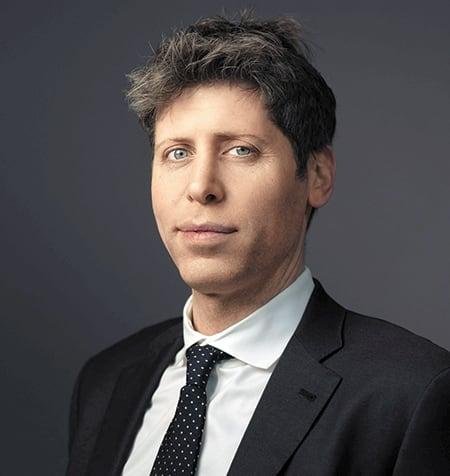
Sam Altman: The Entrepreneur Who Helped Turn AI Into a Global Industry
By GINAGIDA Editorial Team
There was a time when artificial intelligence was largely a subject for researchers, engineers and science-fiction writers.
Then ChatGPT arrived.
Within weeks, millions of people were using an AI system to write, learn, code, analyze information and create ideas. Businesses began experimenting with AI. Governments began debating how it should be regulated. Investors began pouring billions of dollars into the technology.
At the centre of that transformation was Sam Altman, the entrepreneur and investor who helped build OpenAI into one of the world’s most important artificial-intelligence companies.
Today, Altman is the co-founder and CEO of OpenAI, the company behind ChatGPT. OpenAI’s current structure consists of the nonprofit OpenAI Foundation and OpenAI Group PBC, with the Foundation retaining control of the group.
But Altman’s story began long before ChatGPT.
A Young Entrepreneur
Sam Altman was born in Chicago in 1985 and grew up in St. Louis, Missouri.
From an early age, he was interested in computers.
He eventually attended Stanford University, where he studied computer science. He did not complete the degree.
Instead, he chose entrepreneurship.
That decision would become the beginning of a career that eventually took him from the world of startups to the centre of the global AI revolution.
Building His First Company
Altman’s first major startup was Loopt, a location-based mobile application he co-founded in 2005.
The idea was ahead of its time.
Loopt allowed people to share their locations and connect with friends using their mobile phones, at a period when smartphones and mobile applications were still developing.
The company became one of the startups backed by Y Combinator, the influential startup accelerator founded by Paul Graham and others.
Although Loopt was eventually acquired, the experience gave Altman something more valuable than a successful exit.
It introduced him to the world of venture capital, ambitious founders and technology companies.
Taking Over Y Combinator
In 2014, Altman became president of Y Combinator, succeeding co-founder Paul Graham.
It was a major turning point.
Instead of building one startup, Altman was suddenly in a position to help hundreds of entrepreneurs build theirs.
Y Combinator had already become one of Silicon Valley’s most influential startup accelerators.
Under Altman’s leadership, it expanded significantly.
Companies associated with Y Combinator went on to include Airbnb, Dropbox, Stripe, Coinbase and many other major technology businesses.
Altman therefore gained a unique perspective.
He was able to observe what made startups succeed — and what caused them to fail.
He saw founders struggle with hiring, fundraising, product development and competition.
He also saw how quickly technology could create entirely new industries.
That experience would shape his thinking about artificial intelligence.
The Birth of OpenAI
In 2015, Altman joined Elon Musk, Greg Brockman, Ilya Sutskever and other technology and research leaders in founding OpenAI.
The organization began as a nonprofit artificial-intelligence research company.
Its stated mission was ambitious:
to ensure that artificial general intelligence benefits all of humanity.
OpenAI’s original announcement emphasized the idea that advanced AI should be developed for broad human benefit rather than simply maximizing financial returns.
At the time, OpenAI was not the global technology giant it would eventually become.
It was a research organization attempting to understand one of the most difficult problems in computing.
Could machines eventually become capable of performing a broad range of intellectual tasks at a level approaching or exceeding human intelligence?
And if they could, how could humanity make sure the technology was developed responsibly?
Those questions remain at the centre of Altman’s career.
Jensen Huang: The Engineer Who Built the Engine Behind the AI Revolution
From Research Lab to Technology Company
OpenAI changed dramatically after its founding.
In 2019, the organization created a for-profit subsidiary to help raise the capital needed to scale its research and development efforts while maintaining the nonprofit’s mission and governance. OpenAI later reorganized its corporate structure again, with OpenAI Group becoming a public benefit corporation controlled by the OpenAI Foundation.
The change reflected a reality of advanced AI.
Building increasingly powerful AI systems requires extraordinary amounts of computing power, specialized chips, engineers, researchers and infrastructure.
The company needed enormous resources.
And it needed to move quickly.
The Microsoft Partnership
One of OpenAI’s most important relationships became its partnership with Microsoft.
Microsoft invested billions of dollars into OpenAI and provided access to enormous amounts of computing infrastructure through Azure.
The partnership gave OpenAI the resources it needed to train and deploy increasingly powerful AI models.
It also gave Microsoft access to some of the world’s leading AI technology.
The relationship became one of the most consequential partnerships in the technology industry.
ChatGPT Changes Everything
Then came November 2022.
OpenAI released ChatGPT.
The product was based on OpenAI’s GPT technology but presented in a simple conversational interface.
People did not need to understand machine learning.
They did not need to know how neural networks worked.
They simply typed a question.
And the computer answered.
The simplicity was revolutionary.
Students used it for explanations.
Developers used it for programming.
Businesses used it for writing and analysis.
Researchers experimented with it.
Ordinary people began discovering that AI could interact with them in natural language.
ChatGPT rapidly became one of the most widely recognized technology products in the world.
For Altman, the moment transformed OpenAI from an important research organization into a household name.
AI Becomes a Business Revolution
The impact went far beyond ChatGPT.
Companies around the world began racing to integrate generative AI into their products.
Google accelerated its AI efforts.
Microsoft expanded its AI products.
Meta invested heavily in AI.
Amazon increased its AI infrastructure.
Thousands of startups began building businesses around generative AI.
The technology industry entered a new competitive era.
And Altman became one of its most visible leaders.
The Crisis That Nearly Ended His OpenAI Career
In November 2023, one of the most dramatic episodes in modern technology leadership unfolded.
OpenAI’s board announced that Altman would leave the company as CEO.
The board said it had concluded that Altman had not been consistently candid in his communications and no longer had confidence in his ability to lead the organization.
The decision triggered extraordinary turmoil.
Employees threatened to leave.
Microsoft became involved.
Investors became concerned.
The future of OpenAI appeared uncertain.
But the crisis did not last long.
Altman returned as CEO later that month with a new board.
A subsequent independent review commissioned by OpenAI concluded that Altman and Greg Brockman were the right leaders for the company and that the board had expressed its full confidence in their continued leadership.
The episode became one of the most closely watched corporate leadership crises in Silicon Valley.
The New OpenAI
OpenAI has changed dramatically since that crisis.
The company has continued investing heavily in AI models, infrastructure and products.
Its mission remains focused on ensuring that artificial general intelligence benefits humanity.
But the scale of the organization has changed enormously.
In February 2026, OpenAI announced $110 billion in new investment at a $730 billion pre-money valuation, including investments from SoftBank, NVIDIA and Amazon. The company said the capital would support computing infrastructure and the expansion of AI products globally.
That figure illustrates just how far OpenAI has travelled from the nonprofit research laboratory founded in 2015.
Altman’s Vision of AI
Altman’s vision extends beyond chatbots.
He has repeatedly argued that increasingly capable AI could transform scientific research, medicine, education, software development and economic productivity.
In a 2026 essay published by OpenAI, Altman argued that advanced AI should become broadly accessible rather than being controlled by a small number of institutions.
He described the goal as making advanced AI abundant, affordable, safe and useful while ensuring that people and organizations around the world can benefit from it.
That vision raises difficult questions.
Who controls powerful AI?
Who benefits from it?
What happens to jobs?
How should AI be regulated?
How can society prevent misuse?
And how can technological progress happen without concentrating too much power?
Altman is now one of the people expected to help answer those questions.
More Than OpenAI
Altman’s career has never been limited to one company.
Before OpenAI, he was deeply involved in Silicon Valley’s startup ecosystem through Y Combinator.
He has also invested in numerous technology companies and has remained involved in conversations about energy, biotechnology and future technologies.
His career reflects a broader belief that technology can accelerate progress across multiple industries.
Artificial intelligence is simply the field where that belief has had the greatest impact so far.
A Different Kind of Technology Leader
Altman does not have the traditional image of a technology founder.
He is not an engineer known for designing a particular processor.
He is not primarily a product designer.
His strength has been combining technology, capital, talent and long-term strategy.
That makes his leadership role at OpenAI unusual.
The company requires world-class scientists and engineers.
It also requires enormous amounts of capital.
It needs relationships with governments.
It needs partnerships with major technology companies.
And it needs a strategy for bringing highly complex technology to ordinary people.
Altman’s job sits at the centre of all of those demands.
What Entrepreneurs Can Learn From Sam Altman
Start Early
Altman began building technology companies while still young.
His career shows the value of entering an industry early enough to learn before the opportunity becomes obvious to everyone else.
Learn From Other Founders
His years at Y Combinator gave him exposure to hundreds of entrepreneurs.
That experience became an education in what works and what doesn’t.
Think About the Next Technology Wave
OpenAI was founded before generative AI became mainstream.
The founders were thinking about artificial intelligence long before ChatGPT became a global phenomenon.
Build a Team
Altman’s role has never been about doing everything himself.
OpenAI depends on researchers, engineers, product teams, policy experts and business leaders.
The ability to attract exceptional people is therefore one of the most important parts of his leadership.
Think About the Consequences
AI is not an ordinary technology.
It has the potential to change work, education, science, business and society.
Building it therefore requires thinking not only about what the technology can do, but what it should do.
Sam Altman’s Legacy Is Still Being Written
It is too early to know exactly how history will judge Sam Altman.
OpenAI is still building.
Artificial intelligence is still evolving.
The social and economic consequences of increasingly capable AI are still unfolding.
But one thing is already clear.
Altman helped move artificial intelligence from the research laboratory into everyday life.
Before ChatGPT, millions of people had never directly interacted with advanced generative AI.
After ChatGPT, AI became part of ordinary conversations about education, business, programming, creativity and the future of work.
That is a remarkable transformation.
And it happened because a group of researchers and entrepreneurs believed the technology was worth building long before the wider world understood what it could become.
Altman was one of them.
Today, he leads a company operating at the centre of one of the biggest technological shifts in modern history.
The question is no longer whether AI will change the world.
It already is.
The bigger question is what kind of world humanity will build with it.
And Sam Altman is likely to remain one of the most important people in that conversation.
Sam Altman — At a Glance
Full name: Samuel Harris Altman
Born: April 22, 1985
Known for: Co-founding and leading OpenAI
Current role: Co-founder and CEO of OpenAI
Earlier role: President of Y Combinator
Industry: Artificial intelligence and technology
Known for: OpenAI, ChatGPT, AI research and technology entrepreneurship
OpenAI’s current materials identify Altman as its CEO, and its 2026 materials continue to describe him as co-founder and CEO.
Frequently Asked Questions
Who is Sam Altman?
Sam Altman is an American entrepreneur, investor and the co-founder and CEO of OpenAI.
What is Sam Altman known for?
He is best known for leading OpenAI and helping bring generative AI into mainstream use through products including ChatGPT.
Did Sam Altman found OpenAI?
Yes. Altman was among the leaders who co-founded OpenAI in 2015.
What did Sam Altman do before OpenAI?
Before OpenAI, Altman co-founded Loopt and later became president of Y Combinator, where he helped support and invest in numerous technology startups.
Is Sam Altman still CEO of OpenAI?
Yes. OpenAI’s current materials identify Sam Altman as its CEO.
What is OpenAI’s mission?
OpenAI says its mission is to ensure that artificial general intelligence benefits all of humanity.