





Jensen Huang: The Engineer Who Built the Engine Behind the AI Revolution

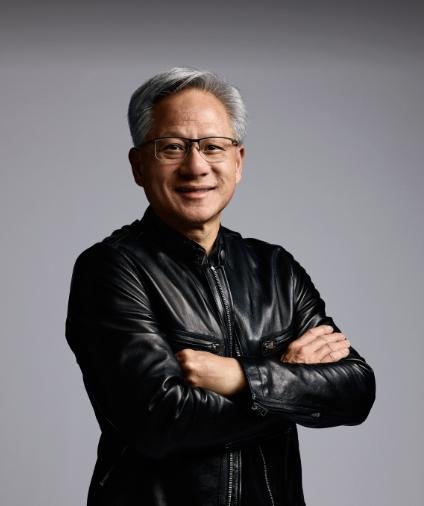
Jensen Huang: The Engineer Who Built the Engine Behind the AI Revolution
By GINAGIDA Editorial Team
There was a time when few people outside the technology industry knew what a GPU was.
Today, the technology has become one of the most important pieces of infrastructure behind artificial intelligence.
At the centre of that transformation is Jensen Huang, the Taiwanese-American engineer who co-founded NVIDIA in 1993 and has led the company as president and chief executive officer ever since.
Huang did not begin NVIDIA with the ambition of becoming one of the world’s most influential technology leaders.
He started with a much smaller idea.
Computers needed better graphics.
More than three decades later, the company he helped create has become one of the most important technology businesses in the world, providing the computing hardware and software that underpin much of today’s artificial intelligence boom.
The transformation is one of the most remarkable stories in modern business.
From Taiwan to America
Jensen Huang was born in Taiwan in 1963.
His childhood would eventually take him from Taiwan to Thailand and then to the United States, where he continued his education.
He studied electrical engineering at Oregon State University, earning a bachelor’s degree, before completing a master’s degree in electrical engineering at Stanford University.
Before becoming an entrepreneur, Huang worked in the semiconductor industry.
He held positions at Advanced Micro Devices and LSI Logic, gaining experience in the technology that sits at the heart of modern computing.
Those years gave him something crucial.
He understood that computing was changing.
And he believed there was an opportunity to build a new kind of processor designed specifically for graphics.
The Three Engineers Who Started NVIDIA
In 1993, Huang joined forces with Chris Malachowsky and Curtis Priem to establish NVIDIA.
The three engineers believed that computer graphics represented an enormous opportunity.
At the time, the idea that specialized graphics processors could fundamentally change computing was far from obvious.
Personal computers were becoming more powerful, but the industry was still dominated by general-purpose processors.
Huang and his co-founders believed another approach was possible.
Instead of asking the computer’s central processor to handle everything, specialized processors could take on highly parallel workloads.
That idea became the foundation of NVIDIA.
The GPU Changes Everything
One of NVIDIA’s defining breakthroughs came in 1999 with the introduction of the GeForce 256, which NVIDIA describes as the world’s first GPU.
The technology helped transform computer graphics and played an important role in the growth of PC gaming.
But Huang saw something beyond gaming.
The same architecture that made graphics processing faster could also be useful for other forms of computation.
That insight would eventually prove enormously important.
The GPU was no longer simply a tool for rendering images.
It could become a powerful engine for computing.
The Company Nearly Failed
The story of NVIDIA’s rise is often told through its eventual success.
But the company came close to failure.
In the 1990s, a major product strategy went badly and NVIDIA faced a serious financial crisis.
The company had to restructure and lay off employees.
Huang has repeatedly spoken about maintaining a mindset that NVIDIA is always vulnerable and could be only a short distance from failure.
That mindset has remained part of his leadership philosophy even after NVIDIA became extraordinarily successful.
It is one of the paradoxes of Huang’s leadership.
The man running one of the world’s most valuable technology companies continues to behave as though complacency is dangerous.
Seeing AI Before Everyone Else
The most important decision in NVIDIA’s history may have been recognizing that GPUs could become central to artificial intelligence.
For years, NVIDIA invested in making its GPUs useful for general-purpose parallel computing.
That work eventually positioned the company perfectly for the rise of machine learning.
When researchers discovered that GPUs could dramatically accelerate the training of neural networks, NVIDIA already had much of the necessary technology.
The company’s hardware became increasingly important to AI researchers.
Then came the explosion of generative AI.
Suddenly, the infrastructure NVIDIA had spent years developing became one of the most sought-after technologies in the world.
The AI Revolution Changes NVIDIA
The arrival of generative AI transformed NVIDIA’s business.
Companies building large AI systems needed enormous amounts of computing power.
Training sophisticated models required specialized hardware.
Running those models at scale required even more.
NVIDIA’s GPUs became central to that infrastructure.
The company was no longer primarily known as a graphics-chip manufacturer.
It had become an AI computing company.
NVIDIA itself describes its evolution as a shift toward accelerated computing and generative AI, with its technology increasingly used across industries.
That transformation changed the company — and changed Huang’s place in the technology industry.
The Man in the Leather Jacket
Huang has also become one of the most recognizable personalities in technology.
His black leather jackets have become almost as famous as NVIDIA’s GPUs.
His keynote presentations attract enormous audiences.
And unlike many technology executives, Huang often spends significant time explaining complex technological ideas to ordinary audiences.
That communication style has become part of his leadership.
In 2026, Huang became more active on X, where he has used the platform to discuss artificial intelligence and the future of computing. Recent reporting described his approach as more educational than confrontational, using social media to explain complicated technology issues while advocating for ideas important to NVIDIA’s future.
It is a notable change for an executive who historically maintained a relatively low personal profile compared with figures such as Elon Musk or Mark Zuckerberg.
NVIDIA Becomes the AI Infrastructure Company
The scale of NVIDIA’s transformation is difficult to overstate.
Its technology now sits behind AI systems being developed by some of the world’s largest technology companies.
But the opportunity goes beyond chatbots.
AI computing is increasingly being applied to:
- Healthcare
- Robotics
- Autonomous vehicles
- Scientific research
- Financial services
- Manufacturing
- Telecommunications
- Cybersecurity
- Drug discovery
- Climate modelling
The GPU has effectively evolved from a graphics component into a general-purpose engine for accelerated computing.
That is the foundation of Huang’s modern business story.
From Chips to an Entire Ecosystem
One of NVIDIA’s greatest strengths is that Huang did not allow the company to become simply a hardware manufacturer.
NVIDIA developed software, development platforms and specialized computing systems around its GPUs.
The result is an ecosystem.
Developers build on NVIDIA’s technology.
Researchers use NVIDIA hardware.
Cloud companies deploy NVIDIA systems.
AI companies train their models on NVIDIA GPUs.
Enterprises build AI infrastructure around NVIDIA’s platform.
That creates something much harder for competitors to displace than a single piece of hardware.
It creates dependence on an entire technological ecosystem.
Huang’s Leadership Philosophy
Huang’s leadership style is unusual.
He is demanding.
He expects employees to operate at a high level.
He frequently emphasizes speed, intensity and learning.
But another recurring theme in his public comments is humility.
Huang has often argued that leaders need to recognize what they do not know.
That is particularly important in an industry changing as rapidly as artificial intelligence.
A technology company can dominate one generation and disappear in the next.
The history of Silicon Valley is full of companies that failed to adapt.
Huang’s greatest achievement may therefore not be creating NVIDIA.
It may be keeping the company relevant through multiple technological revolutions.
The Importance of Long-Term Thinking
NVIDIA’s rise did not happen overnight.
The company spent years investing in technologies whose commercial importance was not immediately obvious.
The CUDA software platform is one example.
NVIDIA introduced CUDA as a way for developers to use its GPUs for general-purpose computing.
At the time, the market for AI computing was nowhere near what it is today.
But NVIDIA kept developing the ecosystem.
When AI workloads exploded, the company was already prepared.
That is an important lesson for entrepreneurs.
Sometimes the biggest opportunities are invisible until the infrastructure already exists.
Recognition at the Highest Level
Huang’s work has earned some of the technology industry’s highest honors.
He has been elected to the U.S. National Academy of Engineering and has received the Robert N. Noyce Award, the IEEE Founder’s Medal and other major recognitions.
He has also been named among the world’s most influential people and recognized as one of the world’s top-performing CEOs.
In 2026, Huang was appointed to the President’s Council of Advisors on Science and Technology, further reflecting the importance of AI and semiconductor technology to national policy.
His influence now extends beyond NVIDIA.
He has become one of the most important voices in the global conversation about artificial intelligence.
Giving Back Through Education
Huang’s connection to education has also remained important.
He has made major gifts to institutions including Stanford University and Oregon State University.
His contributions have supported engineering and technology education and research.
That is consistent with the broader philosophy behind his career.
Technology depends on people.
The next generation of engineers, scientists and researchers will determine what comes after today’s AI revolution.
What Entrepreneurs Can Learn From Jensen Huang
Build for a Future That Has Not Arrived
NVIDIA invested heavily in accelerated computing before AI became the dominant technology story.
Entrepreneurs should not always build for today’s market.
Sometimes they need to build for what the market could become.
Don’t Abandon the Core Technology
NVIDIA’s early focus was graphics.
But the company kept improving the underlying technology until it became useful for much more.
The lesson is not to abandon a product simply because its original market changes.
Sometimes the technology has another life waiting to be discovered.
Build an Ecosystem
A product can be copied.
An ecosystem is much harder to replace.
NVIDIA built hardware, software, developer tools and infrastructure around its technology.
That created a powerful competitive advantage.
Stay Hungry
Perhaps the most famous characteristic of Huang’s leadership is his refusal to become comfortable.
Even after NVIDIA’s extraordinary rise, he continues to speak about competition, technological change and the danger of complacency.
Rebecca Enonchong: The Woman Building Africa’s Technology Future From Cameroon
Jensen Huang’s Legacy
Jensen Huang’s story is ultimately not about computer chips.
It is about seeing a possibility before the rest of the market sees it.
In 1993, he and two fellow engineers believed that graphics processing could become a major computing platform.
In 1999, NVIDIA introduced the GPU.
Years later, researchers discovered that the same architecture could dramatically accelerate artificial intelligence.
Then generative AI arrived.
Suddenly, the technology Huang had spent decades developing became central to one of the biggest technological transformations in modern history.
That is the extraordinary part of his story.
He did not build NVIDIA for the AI boom.
He built the technology that helped make the AI boom possible.
Today, NVIDIA’s official biography describes the company as a pioneer of accelerated computing and a driver of the shift toward generative AI. Huang remains its founder and CEO more than three decades after the company was created.
For entrepreneurs, his story carries a powerful lesson.
The biggest businesses are not always created by chasing the biggest trend.
Sometimes they are created by spending decades building the technology that eventually makes the trend possible.
Jensen Huang — At a Glance
Full name: Jensen Huang
Born: February 17, 1963
Born in: Taiwan
Education: Oregon State University; Stanford University
Company: NVIDIA
Role: Founder, President and CEO
NVIDIA founded: 1993
Industry: Semiconductors, accelerated computing and artificial intelligence
Known for: Building NVIDIA from a graphics-chip company into a central platform for modern AI.
Frequently Asked Questions
Who is Jensen Huang?
Jensen Huang is the founder, president and CEO of NVIDIA, one of the world’s leading semiconductor and accelerated-computing companies.
When did Jensen Huang found NVIDIA?
Huang co-founded NVIDIA in 1993 with Chris Malachowsky and Curtis Priem.
What did Jensen Huang study?
He earned a bachelor’s degree in electrical engineering from Oregon State University and a master’s degree in electrical engineering from Stanford University.
Why is Jensen Huang important to artificial intelligence?
NVIDIA’s GPUs and software ecosystem became critical infrastructure for modern AI workloads, particularly as machine learning and generative AI expanded.
Is Jensen Huang still CEO of NVIDIA?
Yes. NVIDIA currently lists him as its Founder, President and CEO.


Sam Altman: The Entrepreneur Who Helped Turn AI Into a Global Industry
25th Aug 2026[…] Jensen Huang: The Engineer Who Built the Engine Behind the […]