
Aliko Dangote: The Entrepreneur Who Built an African Industrial Empire

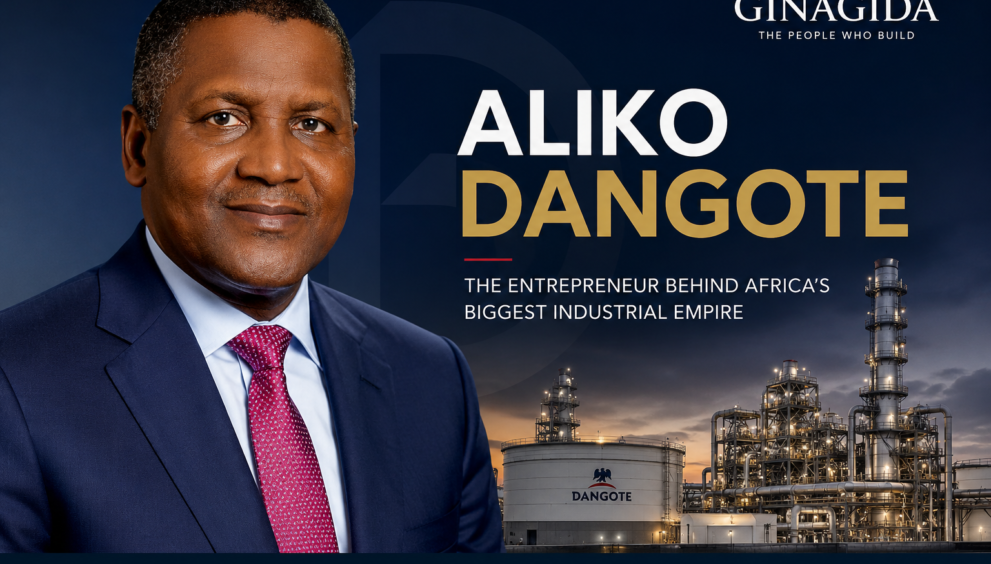
There are entrepreneurs who build companies, and there are entrepreneurs who build industries.
Aliko Dangote belongs to the second category.
Over more than four decades, the Nigerian businessman has transformed a trading business that began with commodities into the Dangote Group, a diversified industrial conglomerate with interests spanning cement, sugar, fertilizer, food and energy. The group says it now operates across more than a dozen African countries and employs more than 30,000 people.
But Dangote’s story is about more than wealth.
It is a story about identifying what people need, understanding where a market is going and then committing enormous amounts of capital and patience to building the infrastructure to serve it.
That philosophy is perhaps most visible in his biggest project yet: the Dangote Petroleum Refinery in Lagos.
The refinery, designed to process 650,000 barrels of crude oil a day, has become one of the defining industrial projects in modern African business. In 2026, Dangote’s refinery is entering another chapter, with plans for expansion and a potential public offering that could become one of Africa’s largest IPOs.
So, who is Aliko Dangote, how did he build his business empire, and what can entrepreneurs learn from his journey?
Who Is Aliko Dangote?
Aliko Dangote is a Nigerian entrepreneur and the founder and chief executive of Dangote Industries Limited, the holding company behind the Dangote Group.
He began his business career in 1978, initially trading commodities including rice, sugar and cement, before moving into manufacturing.
Today, Dangote’s business interests extend far beyond the trading business with which he started.
Dangote Cement has become one of the continent’s largest cement producers, while the wider group has expanded into industries including sugar, fertilizer, salt and petroleum refining. Forbes identifies Dangote as Africa’s richest person and reported an estimated net worth of $28.5 billion on its 2026 Africa billionaires list.
His wealth, however, is best understood as a consequence of the businesses he has built rather than the central story itself.
The more interesting question is how he built them.
Early Life and Education
Dangote was born into a prominent business family in Kano, Nigeria.
His family’s commercial background exposed him to business from an early age. Forbes notes that his grandfather was a successful trader of rice and oats in Kano, while Dangote has also described learning the basics of buying and selling as a young person.
He later attended Al-Azhar University in Cairo, Egypt, where he studied Business Studies.
That combination of family exposure to commerce and formal business education would become important as Dangote developed his own approach to entrepreneurship.
But his early career did not begin with a giant factory or refinery.
It began with trade.
How Aliko Dangote Started His Business Career
In 1978, Dangote began trading commodities.
According to Dangote Industries, his early business activities included rice, sugar and cement. The company eventually moved from trading into full-scale manufacturing.
That transition would become one of the defining decisions of Dangote’s career.
Trading can generate profit by moving products from one market to another. Manufacturing offers something different: control over production.
Dangote increasingly pursued the second model.
Rather than remaining primarily an importer and trader, he began investing in the capacity to produce essential goods locally.
It was a strategy that matched a fundamental reality of many African markets: large populations, growing demand and significant dependence on imported products.
That gap became an opportunity.
From Trading to Manufacturing
The transformation of Dangote’s business accelerated when the group moved into manufacturing.
Over time, cement became one of the group’s most important businesses.
Today, Dangote Cement has operations across Africa, with Forbes reporting production capacity of 48.6 million metric tons annually and operations in 10 African countries. Dangote Cement is also publicly listed in Nigeria.
The importance of cement to Dangote’s strategy is easy to understand.
Africa’s growing cities require roads, homes, factories, bridges and other infrastructure. All of those projects require construction materials.
Dangote positioned his business around that structural demand.
Instead of asking only, What product can I sell?
The larger question became:
What will millions of people and a growing continent need more of in the future?
That distinction is central to understanding Dangote’s entrepreneurial journey.
Building the Dangote Group
The Dangote Group gradually expanded beyond cement.
Its businesses now include cement, sugar, fertilizer, salt and oil and gas, among other interests. Dangote Industries describes the group as having a presence in more than a dozen African countries.
The strategy has been relatively consistent: focus on essential products and build production capacity at scale.
The group’s own stated mission is centered on providing basic needs through local production while creating jobs and pursuing sustainable business practices.
That approach has made Dangote one of the most influential industrialists in Africa.
It has also created a business empire that is closely connected to some of the continent’s biggest economic challenges: infrastructure, food production, energy security and industrialization.
The Dangote Refinery: His Biggest Bet
If cement established Dangote as a major industrialist, the refinery represents the scale of his ambition.
Located in the Lekki Free Zone in Lagos, the Dangote Petroleum Refinery was designed with a capacity of 650,000 barrels of crude oil per day. The company describes it as the world’s largest single-train refinery.
The project required years of construction and billions of dollars in investment.
The refinery began operations in 2024 and has since become a major part of Nigeria’s energy landscape.
For Dangote, the logic behind the project was bigger than simply building another company.
Nigeria is one of the world’s major oil-producing countries, yet for years it relied heavily on imported refined petroleum products.
The refinery was designed to change that equation by processing crude oil locally.
That is the kind of problem Dangote has repeatedly pursued throughout his career: large markets with large structural gaps.
The Risk Behind the Refinery
The refinery was also an enormous personal and business risk.
Forbes reported in 2025 that Dangote described the refinery project as the biggest risk of his life.
The scale of the bet is difficult to overstate.
The facility cost around $20 billion and required the transformation of a large coastal site into a complex industrial facility.
And the project is not finished evolving.
In 2026, Dangote Refinery secured major investment and is pursuing plans to increase capacity toward 1.4 million barrels per day. Reuters has also reported plans for a potential IPO, with the company seeking to raise substantial capital for expansion.
That means one of Dangote’s biggest entrepreneurial bets is still developing.
What Makes Dangote’s Business Strategy Different?
Dangote’s career offers several recurring patterns.
1. He Looks for Structural Demand
Dangote did not build his fortune around products that were fashionable for a few years.
He concentrated heavily on things people and economies consistently need: cement, food products, fertilizer and energy.
That creates a different kind of business opportunity.
Instead of asking what is trending today, the entrepreneur asks:
What will people still need ten, twenty or thirty years from now?
2. He Moved From Trading to Production
Trading was the starting point.
Manufacturing became the bigger ambition.
That shift allowed Dangote to control more of the supply chain and build businesses capable of operating at much larger scale.
It is one of the clearest lessons from his career: selling a product is one thing; building the capacity to produce it at scale is another.
3. He Thinks in Decades
The refinery is perhaps the strongest example.
A project of that magnitude cannot be built with a short-term mindset.
The same is true of cement manufacturing, fertilizer and other heavy industries.
Dangote’s approach has required capital, patience and a willingness to pursue projects whose results may take years to fully materialize.
4. He Builds Around Africa’s Problems
Many of Dangote’s businesses are connected to areas where Africa has historically relied heavily on imports.
Cement.
Food.
Fertilizer.
Petroleum products.
His business strategy therefore intersects with a broader economic idea: industrialization through local production.
Whether every project achieves its intended economic impact is a question that deserves independent analysis, but the strategy itself is clear.
Build what the market currently imports.
Aliko Dangote’s Leadership
Dangote’s leadership style has often been associated with long-term ambition, aggressive investment and a willingness to take large risks.
His companies’ expansion demonstrates a preference for scale.
Rather than building a collection of small businesses, he has repeatedly pursued industries where production facilities, distribution networks and capital investment create significant barriers to entry.
That approach has helped him build businesses that operate across multiple African markets.
It has also made his decisions economically significant beyond his own companies.
When Dangote invests billions of dollars in a refinery or manufacturing facility, the effects can extend into employment, logistics, suppliers, energy markets and government revenues.
Aliko Dangote and Philanthropy
Business is not the only part of Dangote’s public profile.
Through the Aliko Dangote Foundation, his philanthropic activities have focused on areas including health, education and social development.
His philanthropic work has included initiatives addressing nutrition and public health in Nigeria and other areas of social welfare.
Dangote’s corporate profile also notes his involvement with international organizations and initiatives focused on healthcare, education and development.
For GINAGIDA, this is an important part of his story because understanding a major entrepreneur requires looking beyond the balance sheet.
The question is not only what did he build?
It is also what influence has that success created?
Aliko Dangote’s Major Achievements
Among the most significant milestones associated with Dangote’s career are:
- Building the Dangote Group into one of West Africa’s largest business groups.
- Establishing Dangote Cement as one of Africa’s leading cement producers.
- Expanding the group’s operations across multiple African countries.
- Building the 650,000-barrel-per-day Dangote Petroleum Refinery in Lagos.
- Developing a major fertilizer manufacturing business in Nigeria.
- Becoming Africa’s richest person on the Forbes 2026 billionaires list.
- Receiving the Grand Commander of the Order of the Niger (GCON), one of Nigeria’s highest national honours.
What Entrepreneurs Can Learn From Aliko Dangote
Dangote’s journey offers lessons that extend beyond the industries in which he operates.
Find the Gap
Some of the biggest businesses are built by solving problems that already exist at enormous scale.
Think Beyond the First Business
Trading was Dangote’s starting point. It was not his destination.
Build Capacity
Instead of depending permanently on imports or external suppliers, Dangote repeatedly invested in production.
Be Prepared for Long-Term Risk
Large industrial projects can take years and require enormous capital. Entrepreneurs pursuing them need patience as well as conviction.
Understand Your Market
Dangote’s businesses are closely connected to the needs of the markets in which they operate.
Build for Scale
The ambition to serve millions of customers can require a fundamentally different approach from building a small lifestyle business.
What Is Aliko Dangote Building Next?
Dangote’s story is still being written.
In 2026, attention is increasingly focused on the next stage of the refinery.
Reuters reported in August that Dangote Petroleum Refinery is pursuing a potential IPO that could become Africa’s largest, while the company is also looking to expand refining capacity.
There are also plans for a proposed refinery project in Kenya, according to Reuters, suggesting that Dangote’s ambitions in refining extend beyond Nigeria.
The next phase therefore raises a bigger question:
Can Dangote’s model of large-scale industrial investment be replicated across other parts of Africa?
The answer may have implications far beyond the Dangote Group.
Frequently Asked Questions About Aliko Dangote
Who is Aliko Dangote?
Aliko Dangote is a Nigerian entrepreneur and the founder and chief executive of Dangote Industries Limited, the company behind the Dangote Group.
How did Aliko Dangote start his business?
Dangote began his business career in 1978, trading commodities including rice, sugar and cement before moving into manufacturing.
What companies does Aliko Dangote own?
His business interests include Dangote Cement, Dangote Sugar, Dangote Fertilizer and Dangote Petroleum Refinery, among other businesses within the Dangote Group.
What is Aliko Dangote known for?
He is best known for building the Dangote Group into one of Africa’s largest industrial conglomerates and for developing major businesses in cement, manufacturing, fertilizer and petroleum refining.
Where did Aliko Dangote study?
Dangote studied Business Studies at Al-Azhar University in Cairo, Egypt.
What is the Dangote Refinery?
The Dangote Petroleum Refinery is a large-scale refinery in Lagos, Nigeria, designed with a nameplate capacity of 650,000 barrels of crude oil per day.
The Bigger Story
Aliko Dangote’s journey is often told through the number attached to his name: his wealth.
But that is perhaps the least interesting part of the story.
The more important story is what happened between the beginning and the billions.
A young businessman entered commodity trading.
He saw opportunities in products Africa needed.
He moved into manufacturing.
He built factories.
He expanded across borders.
And eventually, he committed billions of dollars to an industrial project capable of changing how one of the world’s largest oil-producing countries supplies its own energy needs.
Whether every ambition succeeds exactly as planned remains to be seen.
But one thing is difficult to dispute: Aliko Dangote has spent his career building.
And that is precisely the kind of story GINAGIDA was created to tell.
GINAGIDA — The People Who Build.

Tony Elumelu: Biography, Business, Career & Achievements | GINAGIDA
22nd Aug 2026[…] Aliko Dangote: The Entrepreneur… […]